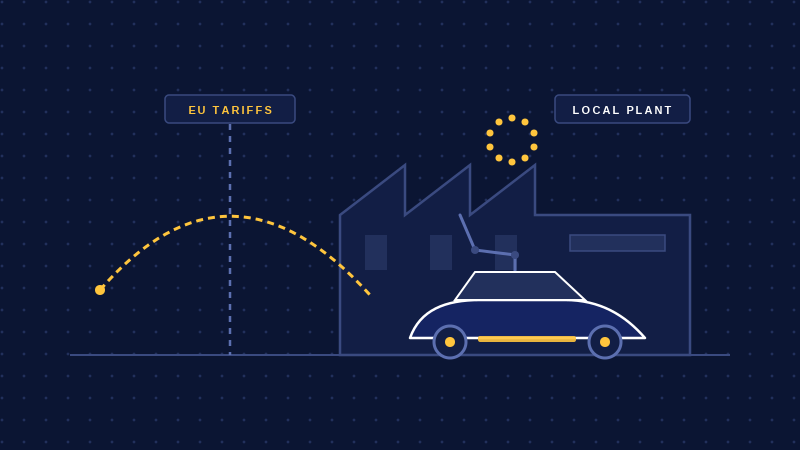
Electric vehicles equipped with range extenders (EREVs) will probably continue to be treated as pure electric cars in EU trade policy rather than hybrids, according to German trade outlet electrive. The classification means these vehicles are not subject to the agreed annual quota of 350,000 Chinese hybrids, but they will still face the European Union's countervailing duties of up to 35.3 per cent.[1]
Customs codes separate extenders from plug-in hybrids
The distinction hinges on vehicle engineering and customs declarations. In conventional hybrids and plug-in hybrids, internal combustion engines can directly drive the wheels. In an EREV, the combustion engine functions exclusively as a generator to recharge the battery while the electric motor provides all propulsion.[1]
The European Commission confirmed this position in its 2024 anti-subsidy regulation, categorising range extenders under customs code 8703 80 10 alongside pure battery-electric vehicles. By contrast, the hybrid quotas negotiated between Brussels and Beijing apply to distinct tariff headings covering combustion-assisted drivetrains.[1]
Impact on Chinese brands in Europe
The lack of an import cap could encourage Chinese manufacturers to ship more range extenders to Europe, even with anti-subsidy duties in place. Several models are already on sale in Germany, including Leapmotor's B10 starting at €32,900 and C10 at €38,600. Xpeng launched its L03 PowerX Reev at €38,600, while Geely's Zeekr brand has announced the Zeekr 9X luxury SUV.[1]
At the same time, the European Commission opened a broader safeguard investigation on 30 October into hybrid imports from all third countries. That inquiry followed a 49 per cent jump in European hybrid imports, which grew from 957,965 units in 2023 to over 1.42 million between July 2025 and June 2026.[1]
Why it matters for Europe
Europe is trying to shield domestic car manufacturers from state-subsidised Chinese competition while managing trade relations with Beijing. By treating range extenders as electric cars rather than hybrids, the EU maintains higher tariffs on them but leaves import volumes unlimited. If Chinese carmakers bypass hybrid caps by prioritising range extenders, European manufacturers could face intensifying price pressure in a transitional market segment where local producers have fewer offerings.