Energy
EU postpones import rules on methane by two years
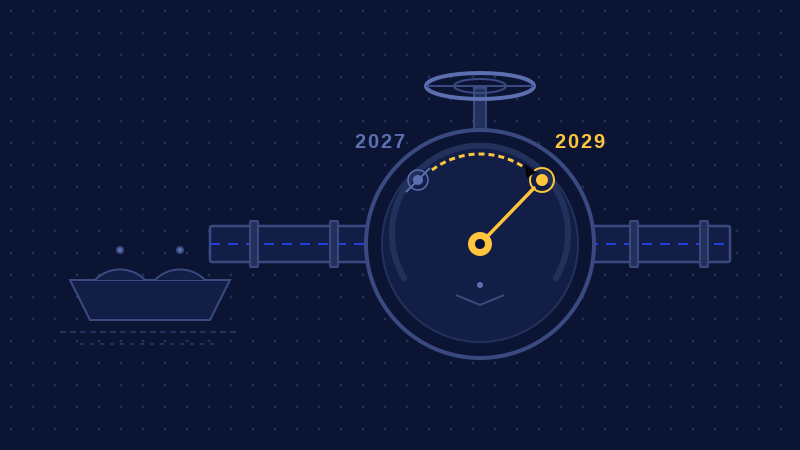
The European Union has delayed its landmark methane import regulation until 2029 following heavy lobbying from the United States and fossil fuel companies.
Norway's Equinor will supply German utility VNG with natural gas until 2044 under an 18-year agreement. The long-term pipeline deal secures alternatives to Russian and Middle Eastern energy.
NBOriginally reported in Norwegian Bokmål by NRK · NorwayNorwegian energy producer Equinor has signed an 18-year agreement to deliver natural gas to German energy company VNG until the end of 2044. Norwegian public broadcaster NRK reported on 24 November 2026 that this marks Equinor's longest supply agreement in 40 years.[1]
Under the terms of the deal, Equinor will deliver up to 15.3 terawatt-hours (TWh) of natural gas each year to VNG. This volume corresponds to approximately 1.4 billion cubic metres of gas annually. For comparison, the annual deliveries exceed Norway's entire wind power production from last year, which reached 13.9 TWh.[1]
Equinor chief executive Anders Opedal stated that 18 years is the maximum contract duration permitted under German regulations. The two companies have traded energy since 1996, when Norwegian gas first began flowing to eastern Germany under their original partnership.[1]
“Norwegian piped gas continues to play an important role in ensuring a secure energy supply for Germany and Europe (translated from Norwegian).”[1]
European gas demand and prices have shifted sharply over recent years. Following sanctions on Russian gas after the invasion of Ukraine, Germany sought to end its heavy reliance on Moscow. Pressure on European energy markets grew further after military escalation in the Middle East in February 2026 pushed international fuel prices higher.[1]
The contract with VNG is part of a series of large long-term supply deals that Equinor has agreed with European utilities throughout 2026. In February, Equinor signed a five-year contract with Dutch utility Eneco for up to 0.5 billion cubic metres per year, followed by an agreement in May to deliver 2.2 TWh annually to Eneco's German subsidiary LichtBlick through 2030.[1]
In August 2026, the Norwegian company secured a 15-year gas contract with German utility Uniper for around 30 TWh annually, alongside a three-year crude oil deal with Polish refiner Orlen. In October, Equinor signed another five-year gas contract with Eneco covering approximately 9 TWh per year.[1]
Germany's reliance on piped Norwegian gas helps shield the European industrial core from supply disruptions and geopolitical tensions in Russia and the Middle East. By locking in deliveries through 2044, German utilities are prioritising regional stability and predictable pipeline flows over volatile global liquefied natural gas markets, even as Europe works toward its long-term decarbonisation targets.
The European Union has delayed its landmark methane import regulation until 2029 following heavy lobbying from the United States and fossil fuel companies.
Germany's reformed National Hydrogen Council has begun its work, the economic affairs ministry announced on 23 November 2026. The body will advise the federal government on hydrogen policy.
Written by AI from the sources below and usually published automatically, without prior review by an editor. Always check the sources for accuracy. Quotes from other languages are translated.
European artificial intelligence firms are reaching hundreds of millions in revenue with tiny teams, triggering early regulatory and enterprise security pressures.
German companies are maintaining investments and launching joint defence production in Ukraine despite war damage. The initiative aims to secure industrial partnerships before global rivals dominate the country's reconstruction.