Germany and EU develop duplicate military satellite networks, driving up costs · SovereigntyNews.eu
European alternatives
Germany and EU develop duplicate military satellite networks, driving up costs
Germany is finalising a separate military satellite constellation alongside the EU's IRIS² network. Economists warn that parallel systems threaten European digital sovereignty.
Germany and the European Union are building two separate low Earth orbit satellite networks for secure military communications instead of combining their efforts. Economists at the Kiel Institute for the World Economy warned in a policy brief that this duplication will cost European taxpayers tens of billions of euros while cementing technological fragmentation, German tech platforms heise online and Golem reported.[1][2]
The urgency of satellite sovereignty increased after October 2026, when SpaceX throttled Starshield terminals used by Ukraine, disrupting its defence against Russian drones. According to heise online, US negotiators had also previously suggested withholding access to satellite services during trade talks over raw materials in February 2025.[1][2]
“Europe orders two networks at once," instead of closing the capability gap together, said Johannes Binder of the Kiel Institute (translated from German).”[2]
— Johannes Binder
The European Union's IRIS² programme involves 358 satellites, including 66 dedicated to defence and security, operated by a consortium of Eutelsat, SES, and Hispasat. Meanwhile, the German armed forces are preparing to sign contracts for SATCOMBw Stage 4, a purely military constellation of 100 to 200 satellites in low Earth orbit. Industrial partners Airbus, OHB, and Rheinmetall formed a joint venture in Bremen in June 2026 to manufacture the satellites.[1][3]
According to reporting by Golem citing Handelsblatt, SATCOMBw 4 will cost up to €15 billion, which includes value-added tax and ten years of operational expenses. Industry estimates previously put the initial setup costs at €8 billion to €10 billion. At the same time, Germany is expected to contribute between €2.5 billion and €3 billion to the €15.6 billion IRIS² project.[1][2][3]
The Kiel Institute calculated that building satellite infrastructure involves massive fixed costs for launches, ground segments, and development, while adding users creates minimal expense. One Starlink satellite costs around €1.2 million to build and launch, compared to €6.2 million for Eutelsat OneWeb, roughly €33 million for IRIS², and between €40 million and €100 million per satellite for SATCOMBw 4. Combined with OneWeb upgrades, European public and commercial spending across the three systems will reach €27 billion to €29 billion.
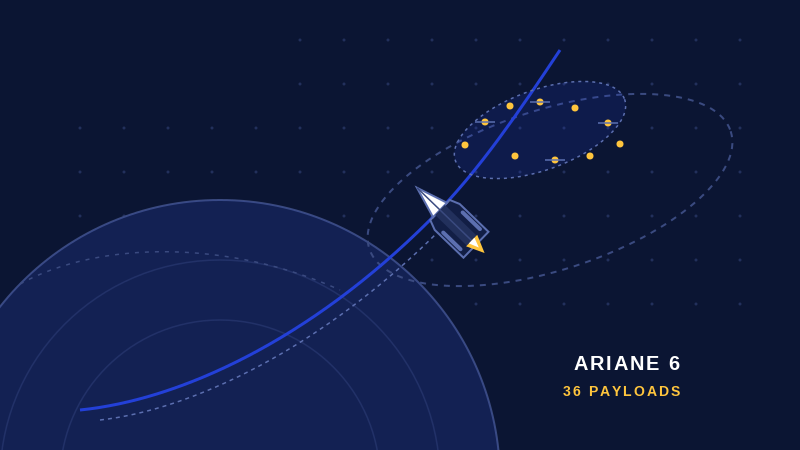
Europe's heavy launcher Ariane 6 has completed its tenth consecutive successful flight, carrying 36 communications satellites for Amazon. The launch proves that Europe provides a viable commercial alternative to United States rocket providers.
London-based defence tech firm Agon has secured $70m in a funding round valuing the company at $450m. The startup builds AI simulation software to test autonomous weapons.
SATCOMBw 4 aims to deploy up to 40 satellites over NATO's eastern flank by 2029, with full operational capacity planned from 2030 using optical laser links and European Ariane 64 launchers. In the interim, the Bundeswehr plans to bridge communications from 2027 by leasing bandwidth from Canadian operator Telesat's Lightspeed constellation.[1][3]
Why it matters for Europe
Europe remains heavily dependent on private American providers such as SpaceX for low-latency satellite communications, exposing military operations to shifting US commercial and political priorities. Instead of pooling procurement into a unified, cost-effective alternative, European governments are duplicating development expenses and splitting hardware standards, leaving them with higher bills and smaller fleets.
What we don’t know yet
Whether the German government will consider integrating SATCOMBw 4 into the European IRIS² framework before signing final contracts.
How interoperable terminals and encryption systems will be between IRIS², SATCOMBw 4, and other NATO member architectures.
The exact terms and costs of the Bundeswehr's interim agreement with Canadian provider Telesat.
Sources
Written by AI from the sources below and usually published automatically, without prior review by an editor. Always check the sources for accuracy. Quotes from other languages are translated.
DEheise online · Germany · 23 November 2026 at 19:33
European artificial intelligence firms are reaching hundreds of millions in revenue with tiny teams, triggering early regulatory and enterprise security pressures.
German companies are maintaining investments and launching joint defence production in Ukraine despite war damage. The initiative aims to secure industrial partnerships before global rivals dominate the country's reconstruction.